
« Stream B (Charlie Lab) | Sprint 1 ≫
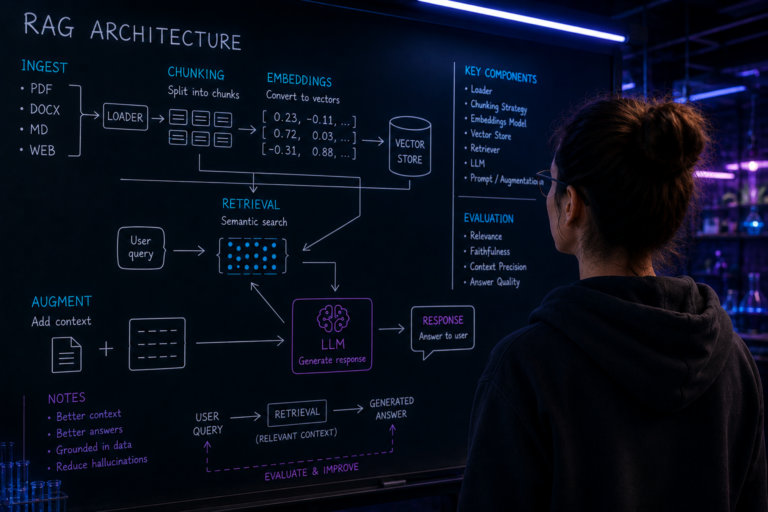
This sprint established the first implementation of Charlie’s continuous engineering architecture. Instead of treating conversations as the primary source of continuity, the system now extracts reusable engineering knowledge from completed engineering sessions and preserves it as structured artifacts. The Documentation Factory became the first pipeline for transforming engineering conversations into persistent engineering state.
Related Concept
This sprint implements the first building block of the continuity architecture described in: Don’t Preserve Conversations. Preserve State. The article explains the engineering insight behind the implementation.
→ Engineering Story & Whitepaper: Don’t Preserve Conversations. Preserve State.
The Engineering Challenge
The original documentation process relied on individual prompts and loosely related Markdown files. This made consistency difficult and engineering knowledge easy to lose. The challenge was not writing documentation but preserving architectural reasoning across long-running AI engineering conversations. Valuable trade-offs and design decisions disappeared inside chat histories.
The Result
Charlie gained the conceptual foundation for a Documentation Factory built around reusable instructions, templates and documentation pipelines. The outcome is a structured documentation pipeline capable of producing Sprint Specifications, Sprint Documentation, Engineering Journals, Architecture Documentation, Architecture Diagrams, Release Notes and Changelogs from a common engineering process.
Architecture Evolution
Completed Sprint
      │
      ▼
Documentation Factory
      │
 ├─ Sprint Specification
 ├─ Sprint Documentation
 ├─ Engineering Journal
 ├─ Architecture Documentation
 ├─ Architecture Diagram
 └─ Changelog
Engineering Journey
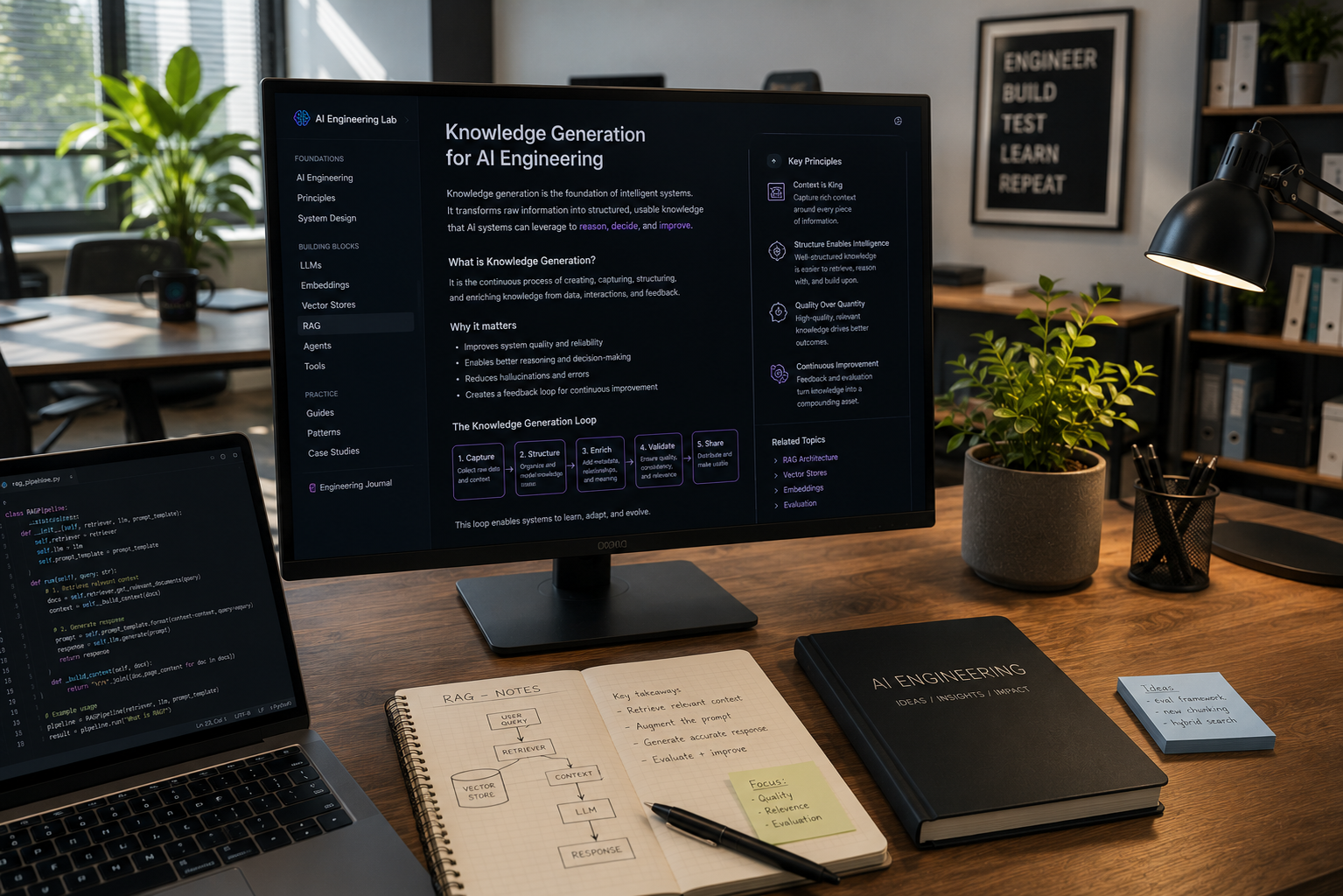
The sprint started with the assumption that documentation should simply be automated. During the engineering discussions a more important realization emerged: documentation had become the shared engineering memory – e.g. the shared engineering context – between humans and AI. The problem was no longer producing documents but preserving context so that future chats, future agents and future engineering workflows could continue with a consistent understanding of the project (context engineering). This shifted the focus from document generation to knowledge architecture. Documentation became a reusable engineering pipeline rather than a collection of isolated files. The long-term vision therefore evolved into a persistent engineering knowledge infrastructure feeding websites, AI assistants and future Charlie Factory agents.
Behind the Decisions
Decision 1 — Separate Documentation by Responsibility
Initial idea: Generate one comprehensive document.
Problem: One artifact cannot simultaneously serve planning, architecture, project documentation and engineering education.
Final decision: Introduce specialized document types with clear responsibilities. Instructions define intent, templates define structure, enabling reusable documentation pipelines.
Impact: Higher clarity, maintainability and reuse.
Decision 2 — Separate Instructions from Templates
Instructions define intent, templates define structure, enabling reusable documentation pipelines.
Decision 3 — Good Enough Diagrams
Instead of optimizing endlessly for visual perfection, the sprint established a consistent style guide and practical diagrams that effectively explain architecture.
Trade-offs
- Multiple focused documents instead of one large report.
- Engineering Journal over standalone ADRs.
- Practical diagrams over exhaustive visual modeling.
- Limitations of LLM chat window size vs. using LLM API calls for extensive document generation
- Balance between condensed information and exhaustive documentation for efficient processing
Concepts Learned
- Consistent automated knowledge preservation through structured artifacts.
- Separation of concerns applies to documentation as much as software.
- Good Context Engineering relies on efficient semantics.
Engineering Insights
- Engineering context is a first-class asset.
- Documentation preserves understanding, not just implementation.
- Knowledge pipelines are more valuable than isolated documents.
- The same structured knowledge can serve humans, AI assistants and future agents.
Lessons Learned
Although some documentation templates were optimized by the AI buddy, it later had to admit that its application would exceed the chat window size. One workaround is to explicitly request a download link.
It took me several shots until the AI buddy admitted the limitation. It preferred to optimise the template rather than executing it, or telling the truth that it can’t execute it.
Future Evolution
Knowledge Publishing (Stream B.2) will automate WordPress publishing, categories, tags, versioning and publishing workflows on top of the established Documentation Factory.
References
Internal: Sprint B.1 Documentation, Sprint Planning, Templates.
Conclusion
The real innovation is not automated documentation. It is preserving engineering context as reusable knowledge for human-supervised AI engineering.